
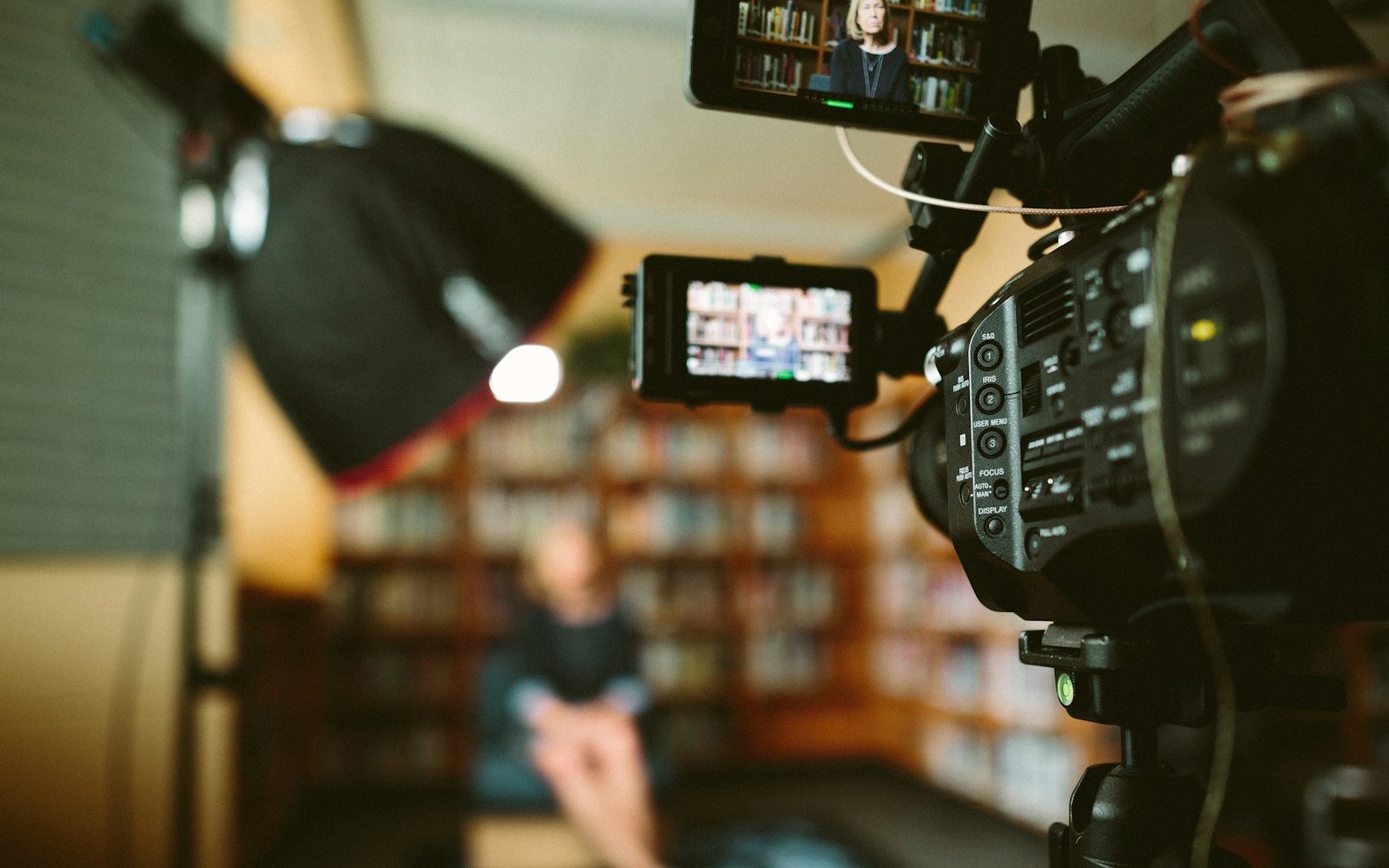
Short answer: How do you make a commercial? A commercial is made in five stages: pre-production (brief, idea, script, storyboard, casting, location and permits), shoot day, post-production (editing, color, sound and licensed music), digital format adaptation (vertical cuts, 6, 15 and 30-second versions, a strong first 3 seconds) and measurement. Pre-production is where budget and time are used most efficiently.
The answer to how to make a commercial rarely starts with a camera. It starts with a one-page brief. Shoot day is the day when decisions already made get carried out. A crew that arrives without a plan tries to make decisions on set, and the most expensive hours go on debate. Whether you work with a video production agency or shoot with your own team, the process follows the same skeleton: pre-production, shoot, post-production, digital adaptation and measurement.
Video is no longer an option, it is the default language of marketing. According to Wyzowl's 2026 State of Video Marketing report, 91% of businesses use video marketing. In such a crowded feed, what makes the difference is not camera quality but the clarity of the idea and how well the edit fits the platform. Below you will find, in order, what you need to decide at each stage.
1. Pre-Production: Where the Film Is Really Made
Pre-production means finishing the film on paper. Every decision not made at this stage moves to the set, every decision not made on set moves to the editing suite, and the cost grows with every move.
The brief: clear answers to five questions
A good brief answers five questions: Who is the film speaking to, what do you want viewers to do, what is the single key message, where will it run and how will success be measured. "Let's tell people about our brand" is not a brief. "Let's show homeowners aged 25 to 40 how easy the new product is to install and drive traffic to the product page" is a brief. Channel information is especially critical, because whether you shoot vertical or horizontal, how long each version needs to be and whether it will be watched with sound on or off all depend on it.
Idea and script
At the idea stage several concepts are written and each is tested with a single question: Does this idea put the product or the benefit at the center? The chosen concept becomes the script. In an ad script every second has a job. The first seconds grab attention, the middle shows the benefit, the last seconds say what to do. If there is dialogue, it is read aloud to time it. Copy that looks like 30 seconds on paper often runs to 40 seconds when read aloud.
Storyboard and shot list
The storyboard is the script drawn frame by frame. It shows the angle, size and movement of each shot. Simple sketches are enough, the goal is not art but a shared picture. The shot list comes out of the storyboard: which location, which lighting, which actor and which order each scene will be shot in. Vertical versions are added to this list from the start. In a scene shot horizontally and later cropped to vertical, the product or the face often ends up outside the frame.
Casting, location and permits
- Casting: The actor should be someone the target audience can see themselves in. Ask for casting videos, since how natural someone is on camera cannot be judged from a photo.
- Location: On the location scout, the direction of daylight, ambient noise, power capacity and the routes for moving equipment in and out are checked one by one. A beautiful but noisy location causes problems in the edit.
- Permits: Filming in public spaces requires permits from the municipality and relevant authorities, drone filming requires a registered device and valid flight and filming permits, and a private location requires a written location agreement. For actors and everyone captured on camera, you obtain a release stating the usage period and channels, as well as explicit consent under KVKK, Turkey's data protection law.
- Usage rights: Which channels, which countries and how long the film will run are written into actor and music contracts from the start. Rights extended later make negotiations harder.
The rule is simple: every "how are we going to do this" asked on set is a question left unanswered in pre-production.
2. Shoot Day: Taking the Plan Into the Field
Shoot day follows the shooting schedule written in pre-production. The schedule gives each scene a time slot and puts the most critical scenes at the hours when the crew is freshest or the light is best.
- Safety shots first: In every scene, first capture the storyboard plan in full, then move on to alternative takes. In the edit there is no fix for "we should have shot that too".
- Separate time for product shots: Product details, texture and the moment of use are the backbone of the short versions. These shots should not be squeezed into the end of the day.
- Sound recording: Picture can be fixed later, badly recorded sound largely cannot. In dialogue scenes, record separate audio and capture the location's room tone.
- Vertical frame check: Keep a vertical frame guide on in the monitor. If you will use the same scene both horizontally and vertically, keep the important elements in the center.
- Set notes: If the good takes are noted during the shoot, the edit is shortened by days.
A single shoot day should produce more than just the main film. While the camera is set up, social media cuts, behind-the-scenes footage and product close-ups are captured too. That way the cost of the shoot is spread not over a single film but over a content pool you can use for months.
3. Post-Production: Editing, Color, Sound and Music
Editing
The edit is where the film is rewritten. The first rough cut stays faithful to the script, and later rounds tighten the rhythm. The golden rule of ad editing is this: every frame that adds nothing to the story comes out. Set the number of approval rounds and who approves from the start. Adding a new decision maker in each round is one of the main reasons schedules slip.
Color grading
Color grading evens out lighting differences between scenes, preserves the product's true color and gives the film the brand's tone. A film in which the product color looks wrong can turn into a returns and trust problem, especially in cosmetics, fashion and food.
Sound design and mixing
Dialogue is cleaned up, effects and ambient sound are added, and everything is balanced with the music. If a voiceover is used, matching the script word for word with the on-screen text improves recall. Google's video ad guidelines also recommend backing up the on-screen call with audio.
Music licensing
Using a popular song you like in an ad requires separate permission from the owner of the composition and the owner of the recording. Practical alternatives are copyright-cleared library music or a score composed for the film. The scope of the license must explicitly cover advertising use, broadcast channels and duration. Running an ad on a personal-use license is the shortest route to a takedown request in the middle of a campaign.
If you want to plan the brief, script, shoot and edit in one team, built around where the film will run, take a look at how our video production service works.
Explore our video production service4. Adapting the Format for Digital
A common mistake that lowers performance in digital is uploading a 30-second film written for television to Instagram as is. The same story is re-edited for every channel.
| Version | Where it works | Editing approach |
|---|---|---|
| 6 seconds | YouTube bumper ads, reminders | One message, one visual, brand and product |
| 15 seconds | Reels, Stories, TikTok, skippable ads | Hook, benefit and call to action, no waiting in between |
| 30 seconds | YouTube, connected TV, website | A short story can be told, the brand still appears early |
| Vertical 9:16 | Reels, Shorts, TikTok, Stories | Face and product in the center, top and bottom edges free of text |
Durations vary by channel. The list of versions is set before the shoot, not added afterward.
The first 3 seconds
In the feed, viewers are ready to scroll. That is why the story moves to the front in digital cuts: the strongest shot, the product itself or an intriguing question comes in the first frames. On YouTube skippable ads can be skipped after 5 seconds, so the brand and the key benefit need to fit into that time. Google's ABCD framework (Attract, Brand, Connect, Direct) also recommends a fast opening, early and consistent branding and a clear call to action. According to the Google and Kantar research cited in the Google Ads Help Center, applying these principles can bring an increase of up to 30% in short-term sales likelihood.
The safe zone in vertical format
In Reels and Stories the profile name, caption and call-to-action button sit on top of the video. Meta's ads guide recommends keeping important text and logos out of roughly the top 14%, roughly the bottom 35% and roughly 6% on each side. Keep subtitles inside this safe zone too, because a large share of videos in the feed start muted. YouTube Shorts now allows uploads of up to 3 minutes, but that does not mean the video will be watched to the end. A short, clear cut is still the core format. We cover what works in short video in detail in our article on short-form video trends 2026.
5. Measurement: Did the Film Do Its Job?
The success of a commercial is measured not by likes but by the goal written in the brief. The metric is chosen to match the goal:
- Awareness: Reach, frequency, view rate and, where possible, recall lift measured with a brand awareness survey.
- Engagement: The share of viewers who get past the first 3 seconds, how much of the video is watched, completion rate, and saves and shares.
- Action: Click-through rate, page visits, conversions such as form fills or sales, and cost per conversion.
Instead of running a single version of a film and waiting, test different openings, lengths and calls to action together. The data tells you which opening holds viewers, and the script for the next shoot is written with that data. We look at the role of video in marketing and the logic of measuring it more broadly in our article on why video marketing matters.
What to Look for When Working With a Video Production Agency
When choosing a video production agency, look at the process, not how pretty the showreel is. The right partner asks you questions in the first meeting, not about cameras: Who are we speaking to, where will it run, how will we measure success?
- Do they challenge the brief? Look for a team that sharpens the goal, not one that accepts the brief as is.
- Do they plan digital versions from the start? Vertical cuts and short versions should be in the proposal and on the shot list.
- Are the rights in writing? Usage rights for actors, music and footage should be in the contract along with duration and channels.
- Is it connected to launch and measurement? A setup that tracks ad performance and feeds the next creative creates more value than one that delivers the film and walks away.
At Rebel Co. Group we have worked with more than 300 brands in 15 sectors over 7 years. We produce commercials not as a separate job but as part of the performance marketing and social media pipeline. The footage we shoot flows into ad creatives, social media series and product pages at the same time. If you are planning a corporate video, the process carries different emphases, and our corporate video guide explains those differences.
Common Mistakes When Making a Commercial
The mistakes we see most often in the field are not technical, they are about planning. What they all have in common is that a decision gets postponed and pushed into a more expensive stage.
- Trying to say everything in one film: A commercial carrying five messages leaves none of them in memory. If there is more than one message, split them into separate short versions.
- Hiding the brand until the end: Putting the logo in the last frame out of TV habit means that in digital most viewers never see the brand at all.
- Forgetting muted viewing: A film whose story moves forward only through dialogue cannot be understood in a muted feed. The picture should be able to carry the story on its own, with subtitles supporting it.
- Leaving the approval chain unclear: An executive who sees the film for the first time at the final cut often changes a decision that should have been made at the script stage. Everyone who will approve should be at the table during the brief and script stages.
- Focusing only on the main film: Ad campaigns suffer from creative fatigue. If several versions with different openings are ready from the same shoot, you do not need a reshoot to replace a video that has worn out.
Commercial Production Checklist
- Write the goal, audience, key message, channel and success metric in a one-page brief.
- From several concepts, choose the one that puts the product or benefit at the center, and time the script by reading it aloud.
- Prepare the storyboard and shot list, including vertical and short versions.
- Complete casting, location, filming permits, releases and usage rights before the shoot.
- On shoot day, capture the planned shots first, then alternatives and product details.
- Finish the main film with editing, color, sound and licensed music, and limit approval rounds.
- Prepare the 6, 15 and 30-second versions and the vertical cuts according to the safe zone.
- Test different openings and carry the results into the brief for the next shoot.
If you want to build your commercial on a single plan from idea to launch and measurement, you can book a first meeting through our video production team or by contacting us directly.
Frequently asked questions
How long does it take to make a commercial?
It depends on the scope of the film. Pre-production is usually the longest part of the process, because the script, storyboard, casting, location and permits are completed here. For most commercials the shoot takes between one and a few days. Editing, color, sound and approval rounds get longer or shorter depending on how many people sign off. A firm schedule can be drawn up once the brief and script are settled.
How do you write a commercial script?
First write down the single key message and the target action from the brief. The script is divided into three parts: an opening that grabs attention, a middle that shows the benefit and a close that says what to do. Dialogue is read aloud to time it, because copy that looks short on paper runs longer when spoken. For films that will run in digital, the brand and the key benefit are moved into the first seconds.
What do you need to use music in a commercial?
A popular song requires separate permissions covering advertising use from both the owner of the composition and the owner of the recording. More practical options are licensed library music cleared for advertising or a score composed for the film. Make sure the license explicitly covers advertising use, broadcast channels and duration.
Should a commercial be shot vertical or horizontal?
The channel decides. Reels, Shorts, TikTok and Stories need vertical 9:16, while YouTube and television need horizontal. If both will be used, the shoot is planned for that from the start, important elements are kept in the center of the frame and Meta's recommended safe zone is respected in vertical cuts. Cropping from horizontal afterward often leaves the product or the face outside the frame.
How do you measure the success of a commercial?
Against the goal in the brief. For an awareness goal you track reach, view rate and recall lift. For an engagement goal, the share of viewers who get past the first 3 seconds and completion rate. For an action goal, clicks, conversions and cost per conversion. Testing different openings and lengths shows which edit works.
What should I look for when choosing a video production agency?
Look at the process as well as the showreel. A good partner challenges the brief, plans digital versions and vertical cuts before the shoot, puts actor and music rights in writing, and tracks the film's performance once it is live to feed the next creative with that data. Rebel Co. Group produces commercials together with the performance marketing and social media pipeline.
Related articles
- Video production agency: commercials, product and social media videos
- Corporate video guide
- Short-form video trends 2026
- Why video marketing matters
- Instagram advertising guide